

Pre Post- Doctoral Fellow

Her research interest includes Organometallic and Bioinorganic Chemistry focusing on "Development of Iridium(III) and Praseodymium(III) Complexes as Photosensitizers for Photodynamic Therapy". She is particularly interested in developing cyclometalated Iridium(III) complexes with an aim to contribute to the development of next-generation PDT agents with enhanced tumor specificity, deeper tissue penetration, and reduced side effects compared to conventional chemotherapeutics.

PhD Scholars
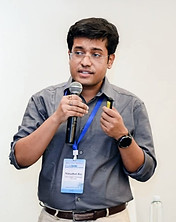
His research interests are focused on exploring Ruthenium, Rhenium, and Iridium complexes as efficient agents for chemodynamic therapy. Emphasis is placed on designing redox-active metal complexes capable of generating reactive oxygen species within the tumor microenvironment to induce selective cancer cell death. Investigations are carried out to understand their catalytic mechanisms, cellular uptake, and interaction with biomolecules. Efforts are directed toward enhancing therapeutic selectivity, biocompatibility, and synergistic effects with other treatment modalities for improved anticancer efficacy.

His research focuses on the development of dual-functioning monometallic Ru(II), Ir(III), and Re(I) complexes for chemodynamic therapy. These complexes are designed to selectively target mitochondria, leading to mitochondrial dysfunction and subsequent cell death. His studies have demonstrated that the complexes can induce multiple cell death pathways, including apoptosis, ferroptosis, and mitophagy. In addition, he has also contributed to the field of photodynamic therapy (PDT), exploring light-activated mechanisms for enhanced anticancer activity.

His research interests are focused on the design and development of Ruthenium, Iridium, and Rhenium complexes as potent photosensitizers for photodynamic therapy. Emphasis is placed on engineering their photophysical and photochemical properties to achieve efficient light absorption, singlet oxygen generation, and targeted tumor selectivity. Studies are conducted to elucidate their photoinduced cytotoxic mechanisms and biological interactions. Efforts are directed toward optimizing their stability, biocompatibility, and therapeutic efficiency for precise and controllable cancer treatment under light activation.

Her research interests are focused on the synthesis and mechanistic exploration of cyclometalated Iridium(III) complexes as potent phototheranostic agents. Emphasis is placed on developing multifunctional systems capable of simultaneous cancer imaging and therapy through light-triggered mechanisms. Studies are conducted to elucidate their photophysical, photochemical, and biological properties, enabling precise tumor localization and selective cytotoxicity. Efforts are directed toward optimizing their structure–activity relationship to enhance photoresponsiveness, biocompatibility, and therapeutic efficiency in targeted cancer treatment.

His research interests are focused on the synthesis and structural design of organometallic compounds for biomedical applications. Special emphasis is placed on the development of advanced nanocarrier systems for targeted and controlled anticancer drug delivery. Investigations are carried out to understand the molecular interactions of these metal-based systems with biological targets, aiming to enhance therapeutic selectivity, minimize side effects, and develop efficient photoresponsive platforms for next-generation cancer treatment.

Her research interests focused on the synthesis and mechanistic investigation of cyclometalated Ir(III), Ru(II), Re(I) complexes as advanced phototheranostic agents for cancer treatment through combinatorial synthesis. A major emphasis is placed on the systematic generation of structurally diverse complexes through combinatorial strategies to identify lead molecules exhibiting high anticancer potency and selective cytotoxicity. Detailed investigations are carried out to evaluate biological properties, including fluorescence efficiency, reactive oxygen species generation, and IC₅₀ determination in cancer cell lines.

Her doctoral research focuses on the design, synthesis, and characterization of iridium- and rhenium-based heterocyclic organometallic complexes for potential chemotherapeutic applications. Her work aims to develop novel metal-based compounds with enhanced biological activity against cancer. A key aspect of her research involves investigating the interactions of these complexes with important biomolecules, including DNA, human serum albumin (HSA), and glutathione (GSH), to gain insights into their binding behavior, mechanism of action, and therapeutic efficacy. Through this interdisciplinary approach, she seeks to contribute to the development of innovative organometallic agents for cancer therapy.
.jpg)
She is pursuing her doctoral research in organometallic and medicinal chemistry, focusing on the design, synthesis, and characterization of iridium-based cyclometalated heterocyclic complexes for anticancer applications. Her work aims to develop novel metal-based photosensitizers for photodynamic therapy (PDT), a light-activated treatment strategy for cancer. The research involves studying the structural, photophysical, and biological properties of these complexes to enhance their therapeutic efficacy and selectivity. By integrating principles of inorganic chemistry, photochemistry, and biomedicine, her research contributes to the development of advanced metal-based therapeutic agents for targeted cancer treatment.

Master's Students

He is pursuing MSc in Chemistry at VIT Vellore. His research interests focus on palladium-catalyzed cross-coupling methodologies for constructing complex organic molecules. Emphasis is on Suzuki and Sonogashira reactions to form selective carbon–carbon bonds. Current work involves applying these methods synergistically for the targeted synthesis of novel organic derivatives, demonstrating their efficiency, selectivity, and relevance in modern organic chemistry.

She is pursuing MSc in Chemistry at VIT Vellore. Her research interests focus on the Suzuki cross-coupling reaction as a versatile method for constructing complex organic frameworks. Emphasis is on optimizing catalysts and conditions for efficient carbon–carbon bond formation between organoboron reagents and aryl halides. Current work involves synthesizing novel biaryl and conjugated compounds, highlighting the reaction’s selectivity and utility.

She is pursuing MSc in Chemistry at VIT Vellore. Her research focuses on designing and developing Ru/Ir-based artificial metalloenzymes as novel catalytic systems for targeted cancer therapy. These hybrid bioinorganic complexes aim to combine the selectivity of enzymes with the therapeutic potential of metal centers, enabling site-specific activation of prodrugs and minimizing toxicity to healthy cells.


